
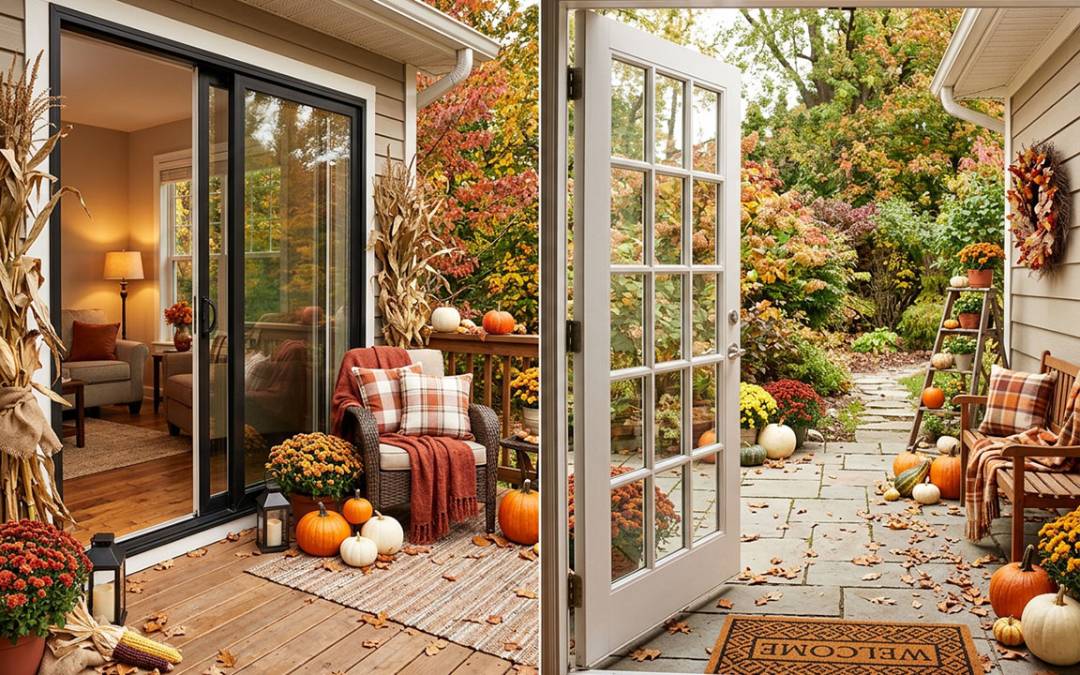
Autumn in Southeastern Pennsylvania is a masterclass in seasonal transitions. The scorching humidity of July and August yields to crisp, invigorating air, turning the local foliage into brilliant shades of amber and crimson. For many homeowners across Montgomery, Bucks, Chester, and Delaware counties, this is the prime season to enjoy the backyard. Whether you are hosting a final weekend barbecue, enjoying a cup of coffee on a brisk Saturday morning, or simply letting the cool breeze sweep through the house, your patio door becomes the focal point of daily life.
When it is time to replace an aging patio door or design a new layout for a home renovation, homeowners often find themselves at a crossroads between the two heavyweights of the industry: sliding glass doors and hinged (often called French) patio doors.
Both styles offer incredible natural light, seamless access to the outdoors, and modern energy efficiency. However, they function entirely differently, interact with indoor and outdoor spaces uniquely, and cater to distinct architectural styles common throughout the Delaware Valley. Choosing the right one depends heavily on your home’s layout, your lifestyle, and your functional priorities before the winter chill sets in.
Sliding Patio Doors: Space-Saving Elegance and Panoramic Views
Sliding patio doors feature large, floor-to-ceiling glass panes mounted on horizontal tracks. One panel glides smoothly along the track, sliding effortlessly past a fixed panel.
Key Advantages:
- Maximized Space Efficiency: Because the door slides open parallel to the wall rather than swinging inward or outward, it requires zero floor clearance. This makes sliding doors the absolute gold standard for tighter rooms, smaller kitchens, or patios bounded by compact deck spaces.
- Unobstructed Views: Modern sliding doors feature remarkably slim vinyl, fiberglass, or aluminum frames. This maximizes the glass area, providing expansive, uninterrupted views of your backyard landscape or autumn foliage.
- Effortless Operation: High-end engineering ensures that today’s sliding doors glide open with minimal physical effort, making them accessible for family members of all ages.
Things to Consider:
- Track Maintenance: Because tracks sit at the threshold, they can occasionally accumulate outdoor debris like autumn leaves, dirt, or dust. Regular vacuuming and wiping keep them gliding smoothly.
- Opening Limitations: A standard two-panel sliding door only opens halfway, as one panel remains stationary. (Though three- and four-panel multi-slide configurations are available for wider openings).
Hinged Patio Doors: Timeless Craftsmanship and Traditional Appeal
Hinged patio doors—most commonly recognized as French doors—operate on hinges attached to the door frame, swinging open either inward into your living space or outward toward your patio. They can be configured as a single operational door or as double doors where both panels swing open.
Key Advantages:
- Classic Architectural Character: Southeastern Pennsylvania is filled with historic colonials, cape cods, and traditional stone farmhouses. Hinged doors offer a timeless, high-end architectural elegance that complements traditional design aesthetics far better than modern sliders.
- Maximum Opening Width: When you install double hinged doors, both panels can swing open simultaneously. This creates a wide, unobstructed opening that is unmatched when hosting large family gatherings or moving bulky furniture and grills in and out of the house.
- Superior Compression Seal: When a hinged door closes, it shuts tightly against a weather-stripped frame. This multi-point locking and compression mechanism creates an exceptionally tight seal against heavy winds and freezing winter drafts—a major plus for PA winters.
Things to Consider:
- Clearance Requirements: You must account for the swing arc of the door. An inward-swinging door requires clear floor space inside for the door to move without hitting furniture, rugs, or walls. An outward-swinging door requires clear exterior landing space and can be susceptible to blocking by heavy winter snow accumulation.
Factors to Weigh for Your Home
When deciding between sliding and hinged options for your home, consider these three local variables:
- Architectural Harmony: Match your home’s DNA. If your home features classic historic detailing, a multi-lite hinged French door with simulated divided lites often feels right at home. If your property leans toward mid-century modern, transitional, or contemporary design, a sleek sliding door enhances those clean lines.
- Traffic Flow and Furniture Placement: Look closely at the room where the door is located. If the entryway sits immediately adjacent to a sofa, dining table, or high-traffic walkway, a sliding door prevents furniture arrangement gridlock. If you have an open-plan room with plenty of breathing room, double hinged doors make a dramatic, welcoming statement.
- Energy Efficiency and Weather Resistance: Both styles have advanced tremendously in energy efficiency. High-performance Low-E glass and insulated frames keep your home comfortable year-round. However, if your back patio faces open fields that catch harsh winter winds, the tight compression seal of a well-fitted hinged door or a premium-engineered sliding door with multi-point locking is essential for keeping heating bills manageable.
Upgrade Before the Winter Chill Moves In
Whether you lean toward the clean, space-saving views of a sliding glass door or the timeless, grand entrance of a hinged French door, autumn is the ideal season to upgrade. Replacing your doors now allows you to seal out drafts, improve your home’s security, and enhance your energy efficiency before winter sets in—all while taking advantage of mild installation weather.
Ready to explore your options or see full-scale models up close? Reach out to Graboyes Window and Door at (610) 279-3905 for more information, expert guidance, and a free consultation tailored to your Southeastern Pennsylvania home.